
Bad Wheel Bearing Symptoms: How to Tell a Wheel Bearing Is Failing
Bad Wheel Bearing Symptoms: How to Tell a Wheel Bearing Is Failing: the short answer
Common signs are a grinding or humming noise that tracks road speed, a vibration or knock felt through the steering or chassis, play when you rock the top and bottom of the tire by hand, uneven tire wear, and an ABS or traction-control warning light if a speed sensor rides in the hub. Any one of these on its own is worth checking; two or more together usually means the bearing needs replacing soon.
Key takeaways
- Noise, play and vibration are the three core signs; tire wear and ABS lights are secondary clues.
- Check play by rocking the top and bottom of the tire by hand with the wheel off the ground.
- It is a safety risk. A failing wheel bearing can seize, develop excess play, or in severe cases let the wheel lose support. It should be replaced promptly rather than driven on normally.
- A qualified shop can confirm a bearing diagnosis with the wheel raised and the engine off.
What are the main symptoms of a bad wheel bearing?
A wheel bearing rarely fails all at once. It gives signs for weeks or months before it becomes dangerous. The five below are the ones to look for. Noise, play and vibration are the core signs. Tire wear and a warning light are supporting clues that point to the bearing when they appear together with one of the first three.
| Symptom | What you notice | What it indicates |
|---|---|---|
| Noise | Hum, growl or grinding that rises with road speed and changes in curves | Raceway surface damage; the louder and rougher, the further it has gone |
| Vibration or steering feel | Shake in the steering wheel or floor, vague or wandering steering, pull to one side | Roughness or play in the bearing transferred to the steering; on front wheels it is felt in the steering wheel |
| Play | Clunk or movement when you rock the raised tire at top and bottom | Internal wear or loss of preload; the bearing no longer holds the wheel square |
| Uneven tire wear | Cupped, scalloped or one-sided wear on one tire only | The wheel has been moving or running out of line, often from play |
| ABS or traction control light | Warning light on, sometimes with ABS working when it should not | The wheel speed sensor reads the hub; play or a damaged encoder ring upsets the signal |
Any one of these alone is worth checking. Two or more at the same corner usually mean the bearing needs replacing soon.
How do you confirm each symptom on the vehicle?
Most checks are done with the wheel raised and the car safely supported on a stand, engine off and in gear or park.
| Symptom | How to confirm it | What else can cause it |
|---|---|---|
| Noise | Road test: weave gently at a steady, moderate speed and note which direction makes it louder. Then spin the raised wheel by hand and feel for roughness. | Worn or cupped tires, a dragging brake, a worn CV joint |
| Vibration | Check wheel balance and tire condition first. Then look for play and roughness at the hub. | Out-of-balance wheel, bent rim, warped brake disc |
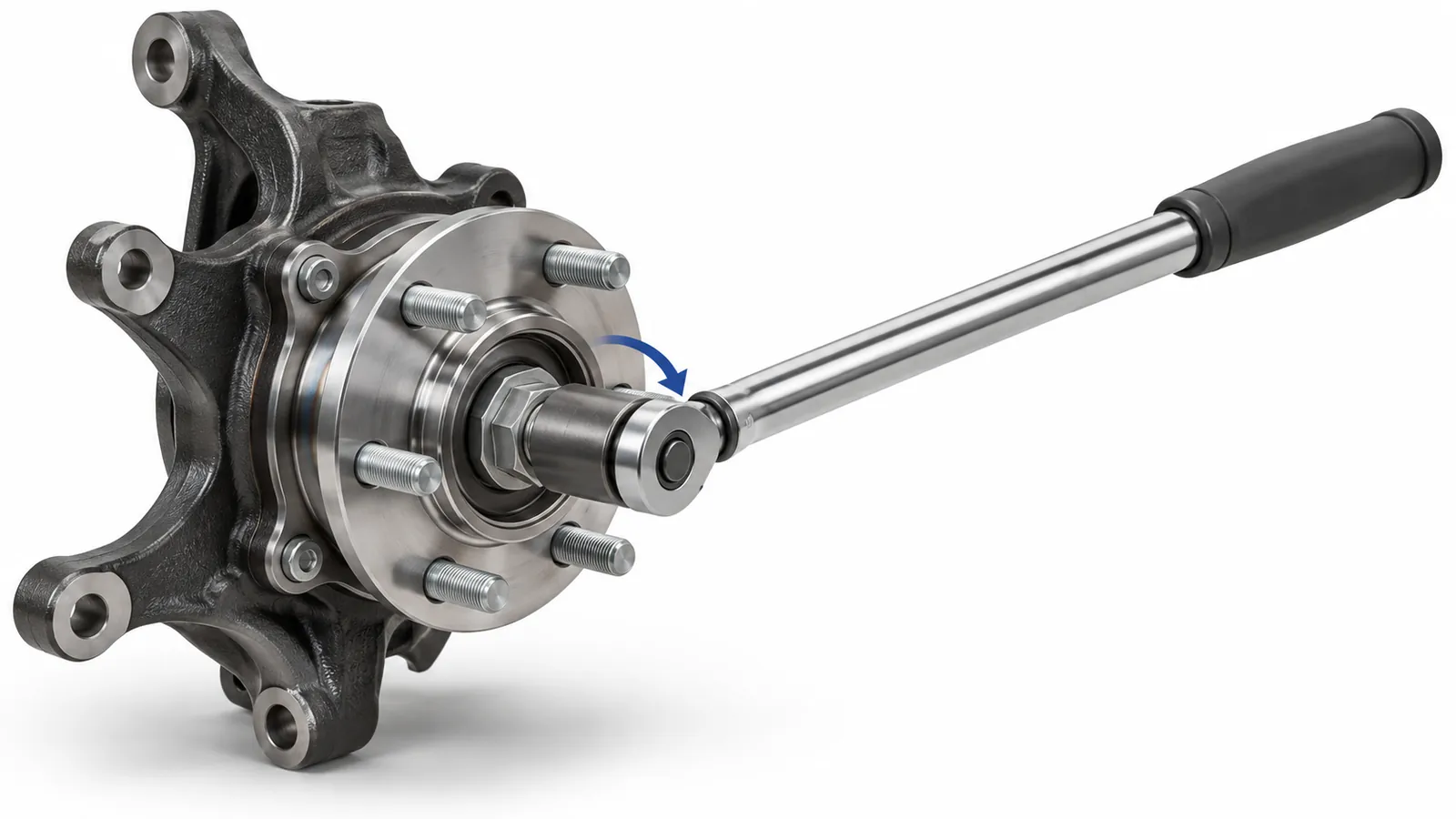
| Play | Grip the tire at 12 and 6 o'clock and rock it. Have a helper press the brake: if the play disappears, it is in the bearing. | Worn ball joint or suspension bushes (play stays with brake on) |
| Tire wear | Compare tread depth across each tire and between left and right. | Wheel alignment out, wrong pressure, worn shock absorbers |
| ABS light | A code reader shows which wheel speed sensor is faulting. Check the sensor and wiring, then the hub for play. | Damaged sensor, broken wire, dirt on the sensor tip |
The brake test for play is the most useful single check. Pressing the brake locks the hub to the knuckle through the caliper, so any movement left in the bearing is taken out. Movement that stays with the brake on is in the suspension or steering joints, not the bearing.
Why is it risky to keep driving on a bad wheel bearing?
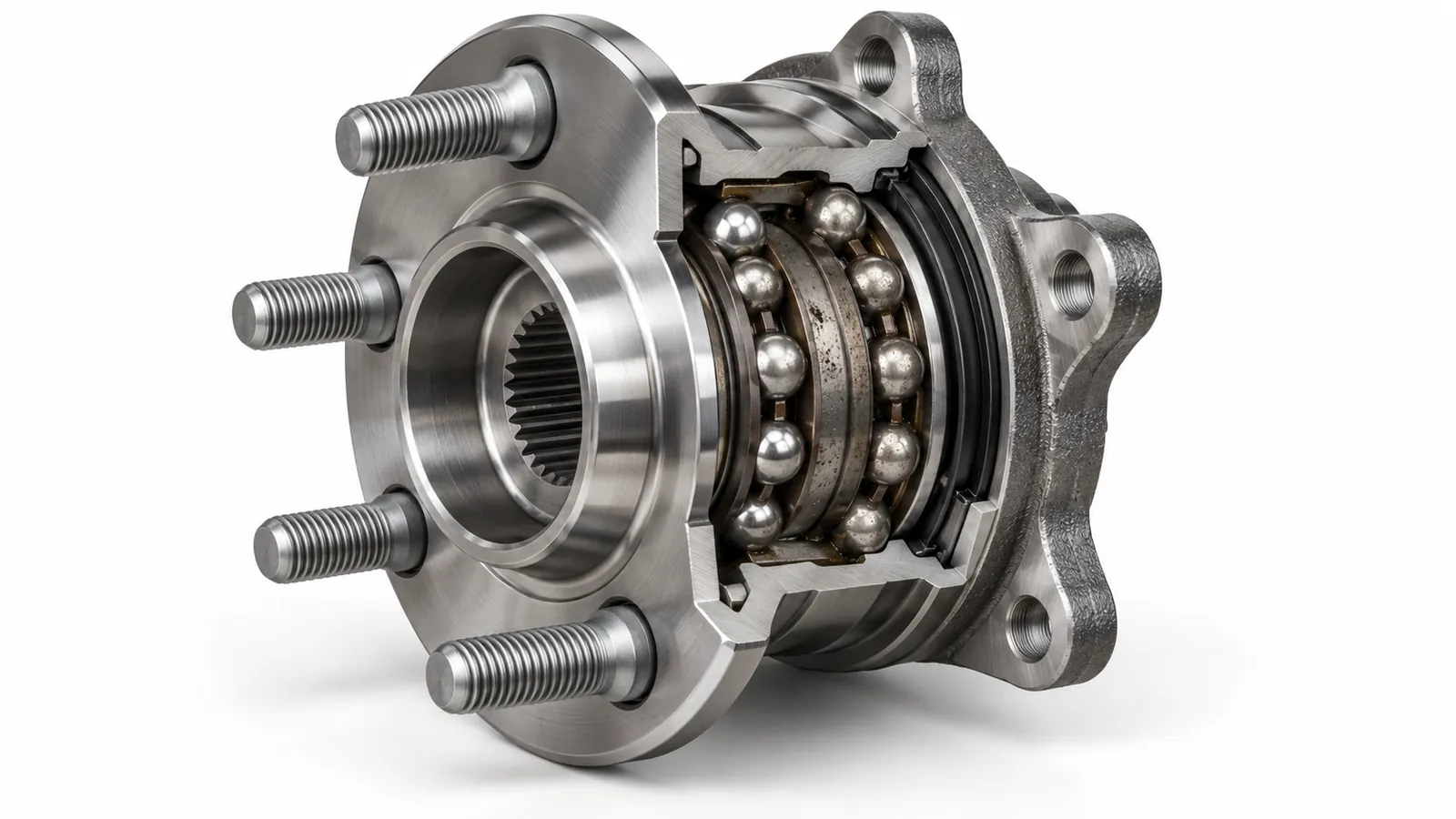
The wheel bearing is what holds the wheel to the car while it turns. As it wears, the problems get worse in a predictable order.
- Heat: a rough bearing creates friction. Heat thins and drives out the grease, which speeds up the wear.
- Play: the wheel starts to move on the hub. Braking and steering become less precise, and the brake disc can knock the pads back, giving a long pedal.
- Seizure: a bearing that runs dry can lock up or drag hard, which can pull the car sideways at speed.
- Separation: in rare, extreme cases the bearing breaks up and the wheel loses support.
Damage also spreads to other parts. Heat and play can ruin the ABS sensor, the knuckle bore or the CV joint, which turns a bearing replacement into a larger repair.
When is it urgent and when can it wait briefly?
| Situation | What to do |
|---|---|
| Faint hum only, no play, no heat, no warning light | Book a repair in the next days; avoid long motorway trips meanwhile |
| Noise plus uneven tire wear, but no play | Repair soon; the bearing is already affecting the wheel |
| Any play you can feel at the tire | Drive only as far as the workshop, at low speed |
| Grinding, a hot hub, or steering pull | Stop driving; have the car moved to a workshop |
| ABS light together with noise or play | Stop driving normally; ABS may not work as expected |
There is no safe fixed distance for driving on a failing bearing. The table is a guide to priority, not permission to keep driving. When in doubt, have it inspected.
How do you order a replacement wheel hub bearing?
Wheel hub bearings are on the wheel hub bearing page. Send the part number stamped on the old unit, or the vehicle make, model, year and wheel position (front or rear, with or without ABS), so we can check it against the range. Every ENRO bearing is Made in China and passes 100% outgoing inspection under Japan-managed quality control. Your inquiry goes straight to the export team, not a call center. We reply within 24 hours on business days.