

Bearing guides
Short answers, size data and FAQs for bearing buyers. Written by the ENRO Export Team.
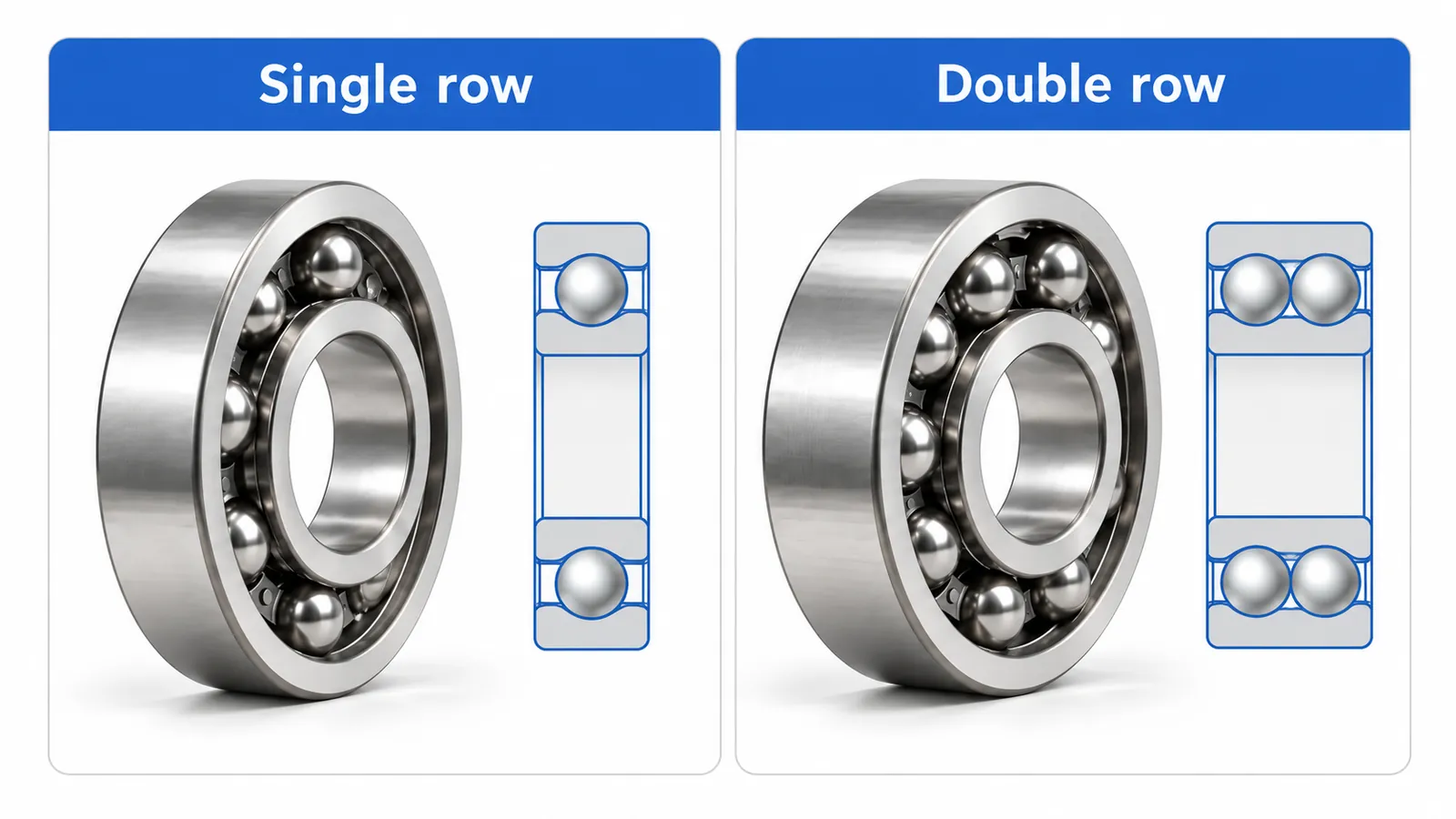 Deep groove ball
 Deep Groove Ball Bearing Double Row
A double row ball bearing has two rows of balls in one set of rings. It carries more radial load than a single-row bearing of the same bore and OD, at the cost of a wider section. It fits where one bearing must carry a heavy combined load on a short shaft; a single row bearing is the better choice at speed and in most motors, pumps and hubs. ENRO lists single-row deep groove ball bearings only, in series 6700, 6800, 6900, 6000, 6200, 6300, 16000, 6400, and a single row size shares the bore and outside diameter of its double row counterpart.
Read guide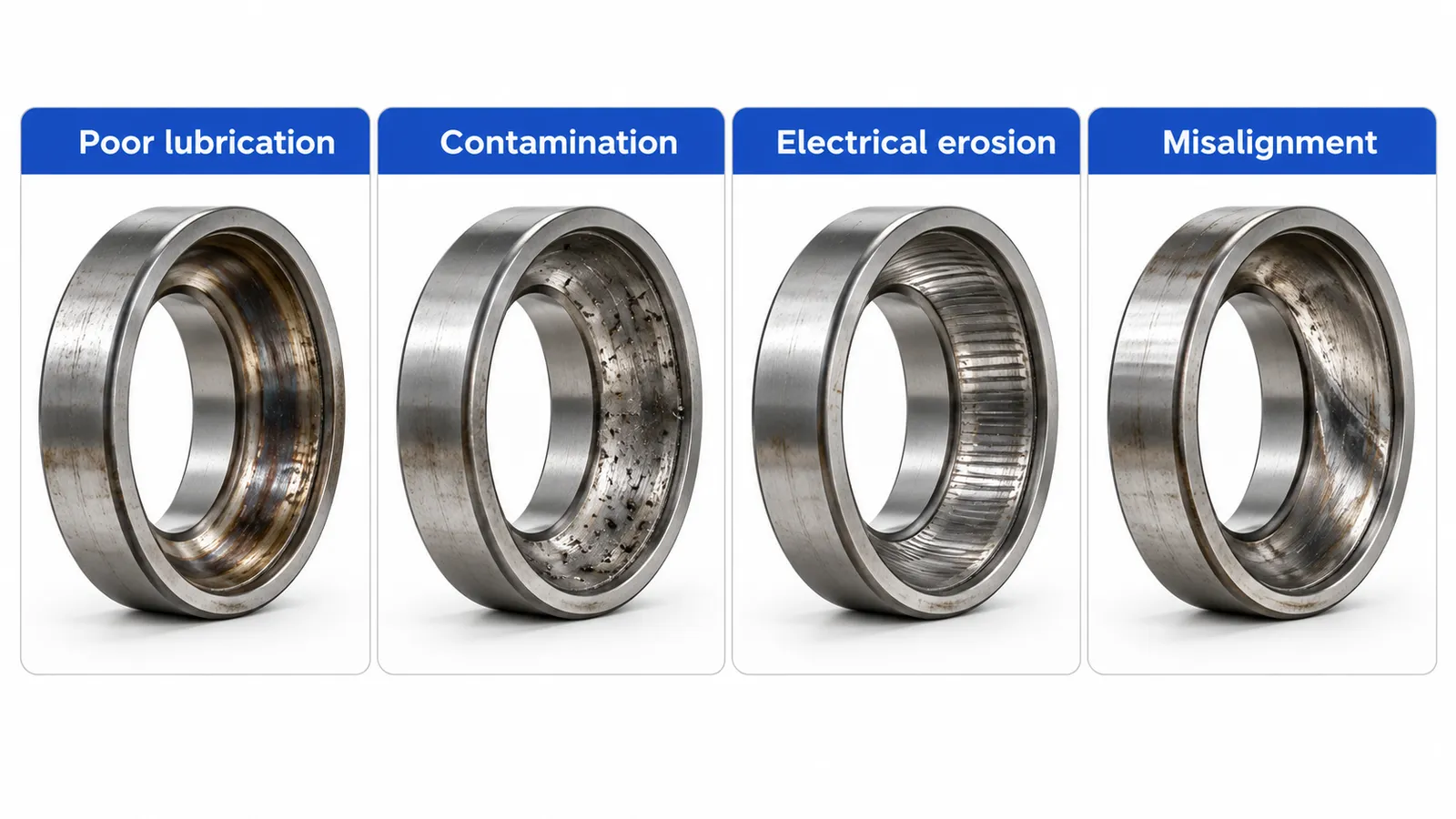 Electric motor
 Electric Motor Bearing Failure
Lubrication problems, contamination, misalignment, wrong fits, overload, and electrical erosion from shaft currents in inverter-driven motors. Read the wear path on the old bearing before you order: it tells you whether the replacement needs a different seal, a different clearance group, or a fix to the motor rather than the bearing.
Read guide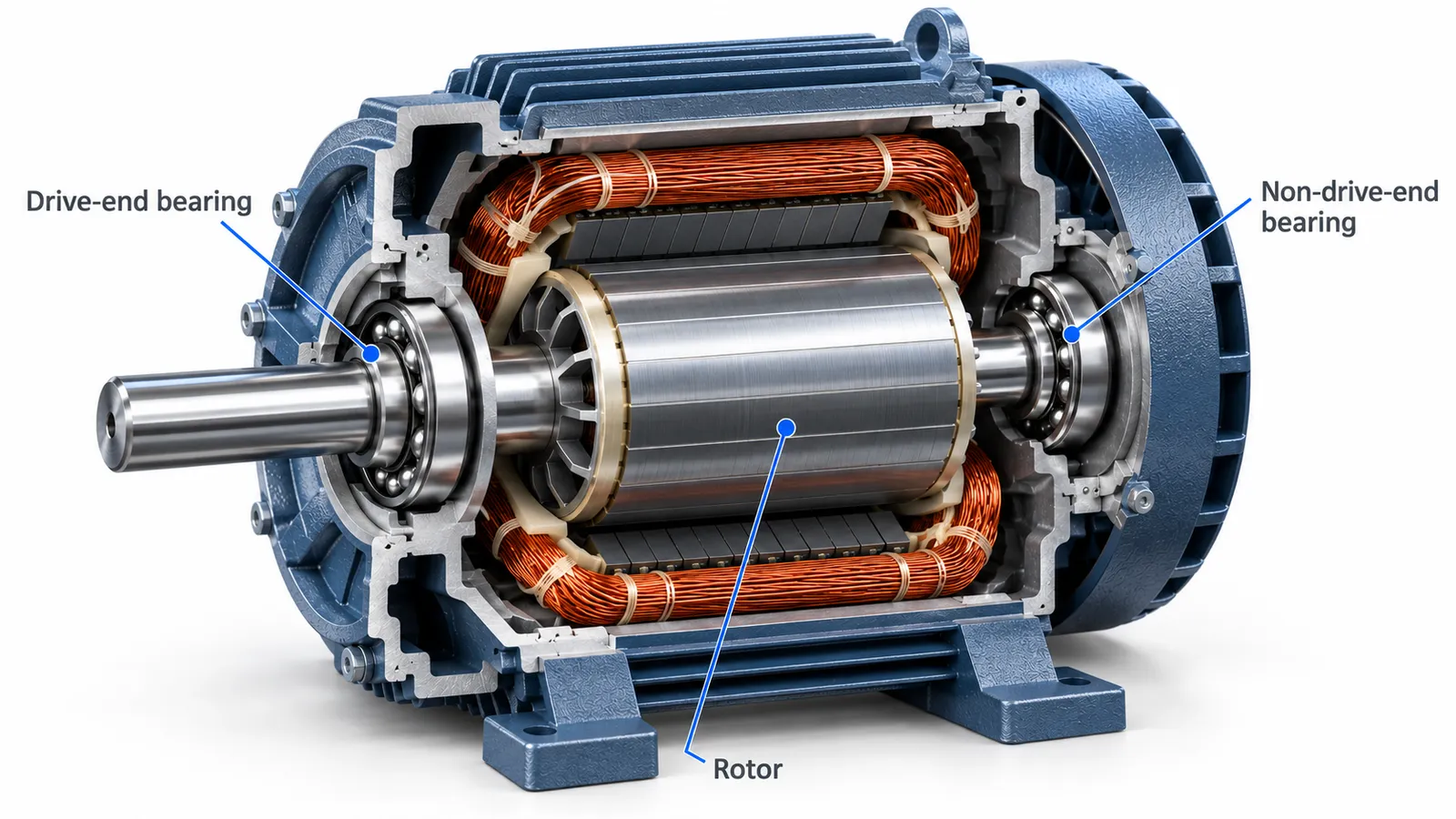 Electric motor
 Electric Motor Bearing Types
Most small and medium electric motors run on deep groove ball bearings, usually one at each end of the shaft. Larger motors with belt or heavy radial loads often use a cylindrical roller bearing at the drive end. C3 internal clearance is common in motors because the shaft runs warmer than the housing. The choice within the deep groove type is then closure (open, ZZ or 2RS) and clearance group (CN, C3 or C4), and the size usually follows the IEC frame.
Read guide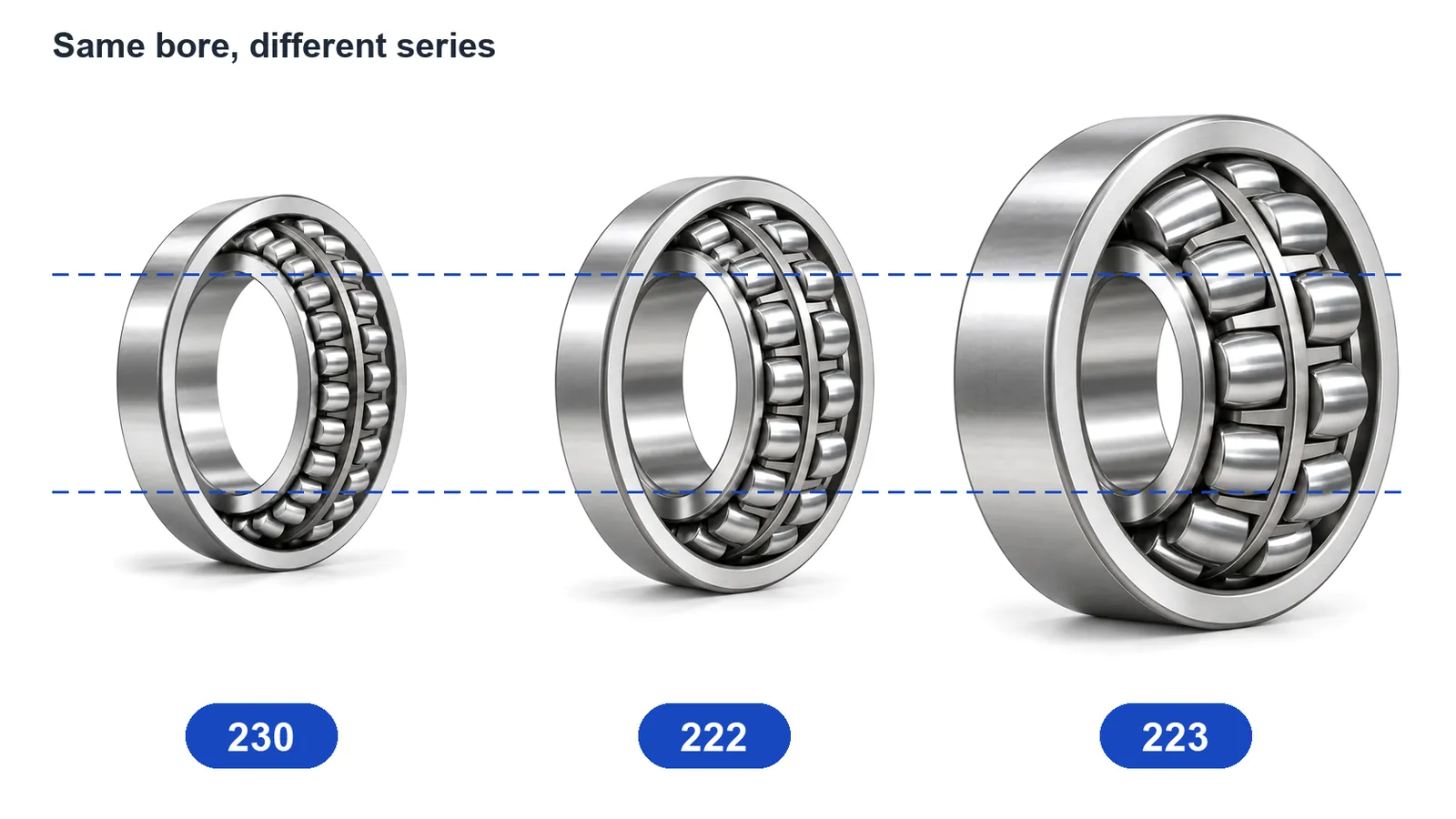 Spherical roller
 Spherical Roller Bearing Size Chart
Spherical roller bearing sizes follow the ISO 15 dimension series: the last two digits of the number fix the bore and the first three fix the series, which sets outside diameter and width. ENRO lists 231 sizes in series 22200, 21300, 22300, 24000, 23200, 23100, 24100, 23000, 23900, 23800, 24800, from 25–500 mm bore and 52–920 mm outside diameter, each with cylindrical or tapered bore and the W33 groove.
Read guide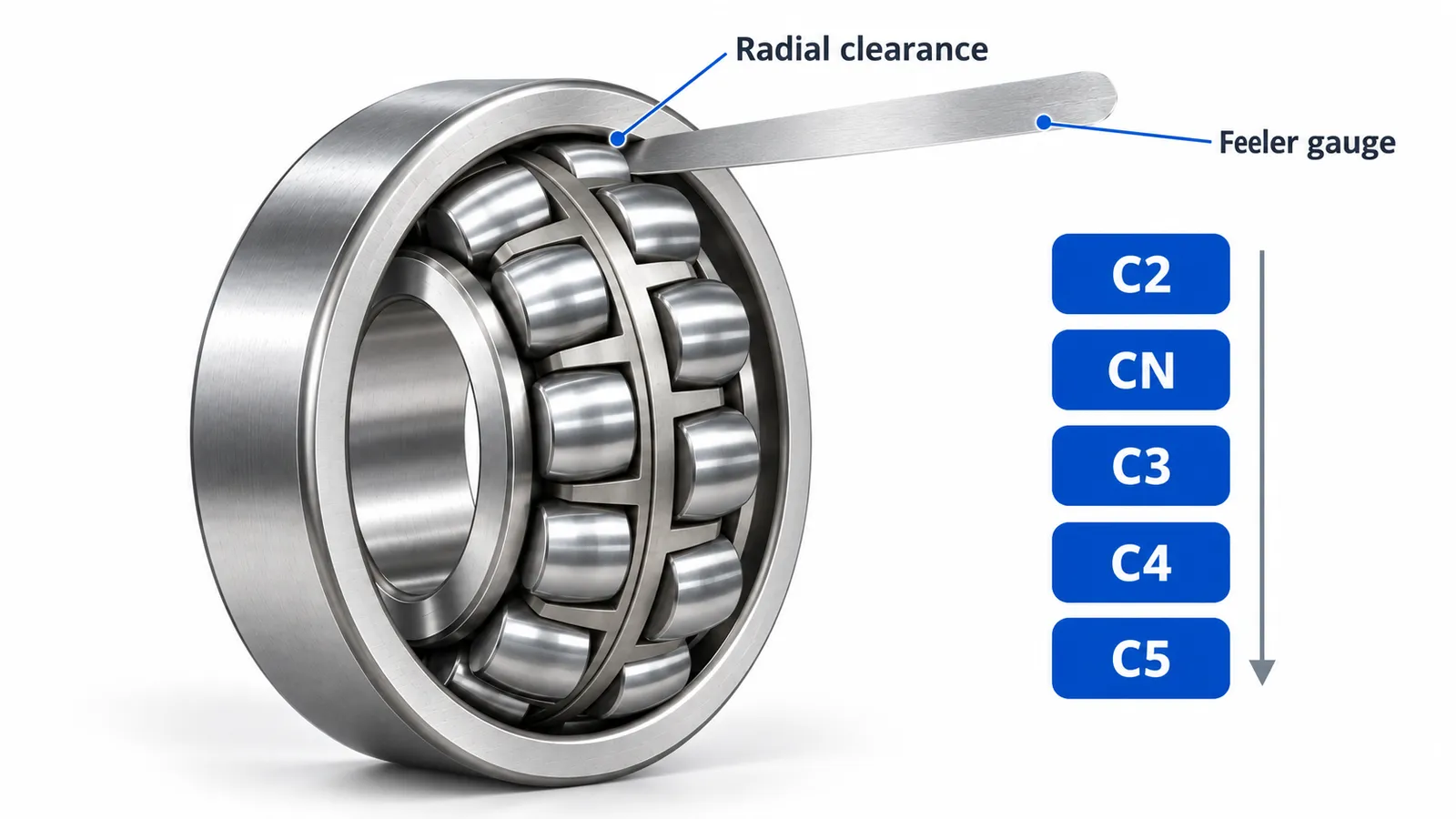 Spherical roller
 Spherical Roller Bearing Clearance Chart
Clearance groups run from smaller to larger: C2, CN (normal), C3, C4, C5. C1 is smaller than C2 and is defined only for some bearing types. C3 is common where the inner ring runs warmer than the outer ring or has a tight fit. For spherical roller bearings the ISO 5753-1 ranges grow with the bore, from about 30–45 µm (CN) at a 40 mm bore to 130–200 µm at a 200 mm bore, and a tapered bore is driven up its sleeve until a set part of that clearance is removed.
Read guide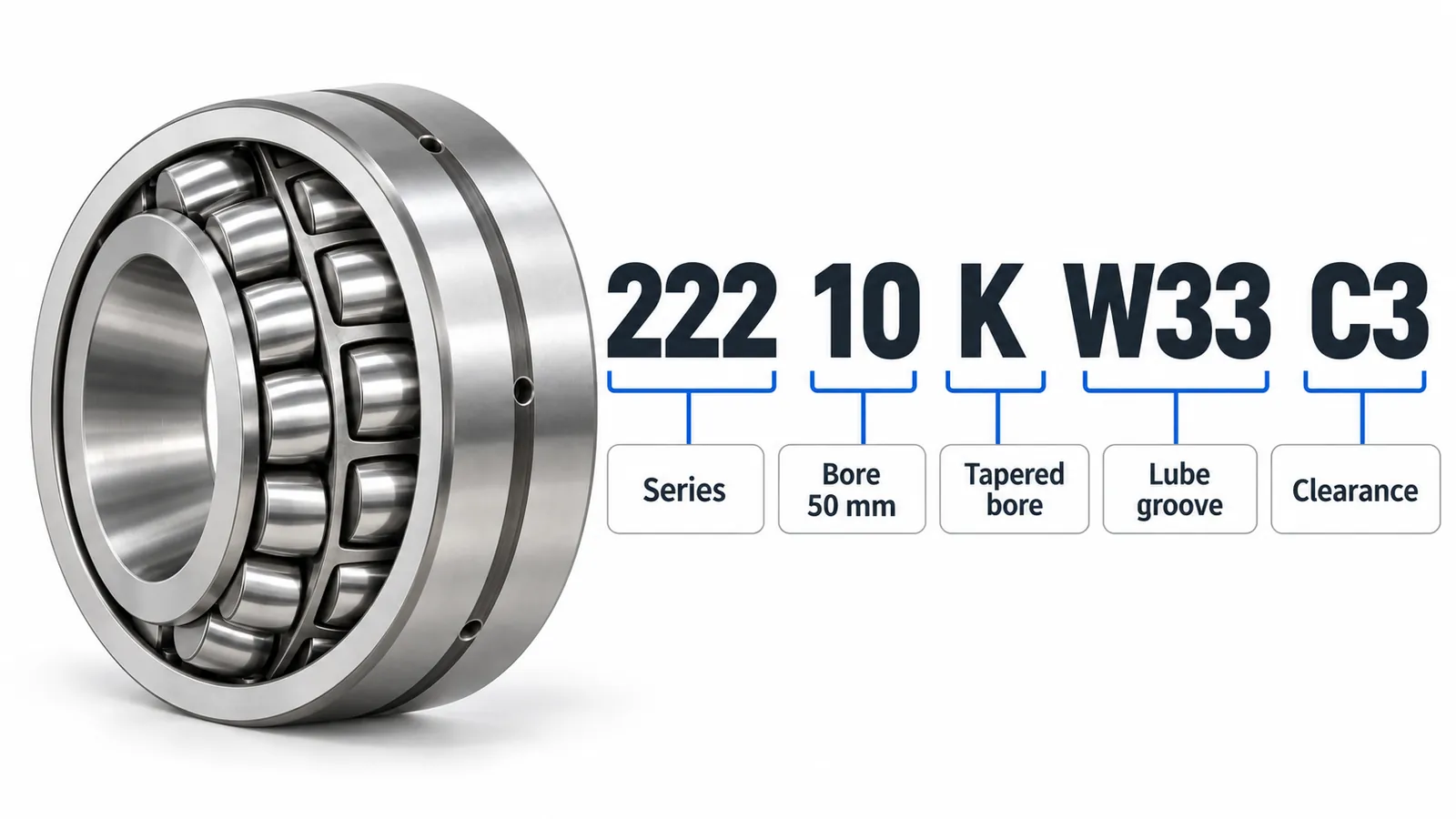 Spherical roller
 Spherical Roller Bearing Number
The first three digits give the dimension series (for example 222) and the last two the bore code × 5. 22210 is a 222-series bearing with a 50 mm bore. For bores of 500 mm and up the bore is written after a slash, such as 230/500. A 22210 K W33 C3 is therefore a spherical roller bearing (2) in width series 2 and diameter series 2, with a 50 mm bore, a 1:12 tapered bore, a lubrication groove, and C3 clearance.
Read guide