
Wheel Hub Bearing Torque: Why the Axle Nut Setting Matters
Wheel Hub Bearing Torque: Why the Axle Nut Setting Matters: the short answer
It depends on the vehicle and the bolt or nut being torqued, so always use the figure in the vehicle's own service manual. The number matters because it sets the preload the bearing design relies on; it is not a generic bearing spec. A loose axle nut lets the hub shift under load instead of running true against the bearing. That uneven loading accelerates wear and pitting and can let the hub work itself looser over time.
Key takeaways
- The axle nut is part of the bearing setting: it holds the preload on a sealed hub unit and sets the end play on adjustable tapered roller designs.
- Hub mounting bolts, the axle nut and the wheel nuts each have their own figure; the axle nut varies the most between vehicles.
- Too loose lets the hub shift, causing play, noise, fretting and ABS faults; too tight overloads the raceways, causing heat and early flaking.
- Use the service manual figure and procedure for the exact vehicle, a calibrated torque wrench, and a new nut or cotter pin where specified.
Why does torque matter on a wheel hub bearing?
A wheel bearing only works as designed when its rings are held at the right preload: the small, controlled squeeze between the balls or rollers and the raceways. Too little and the rings can move; too much and the bearing runs hot. On most vehicles the fastener torque is what holds that setting on the car.
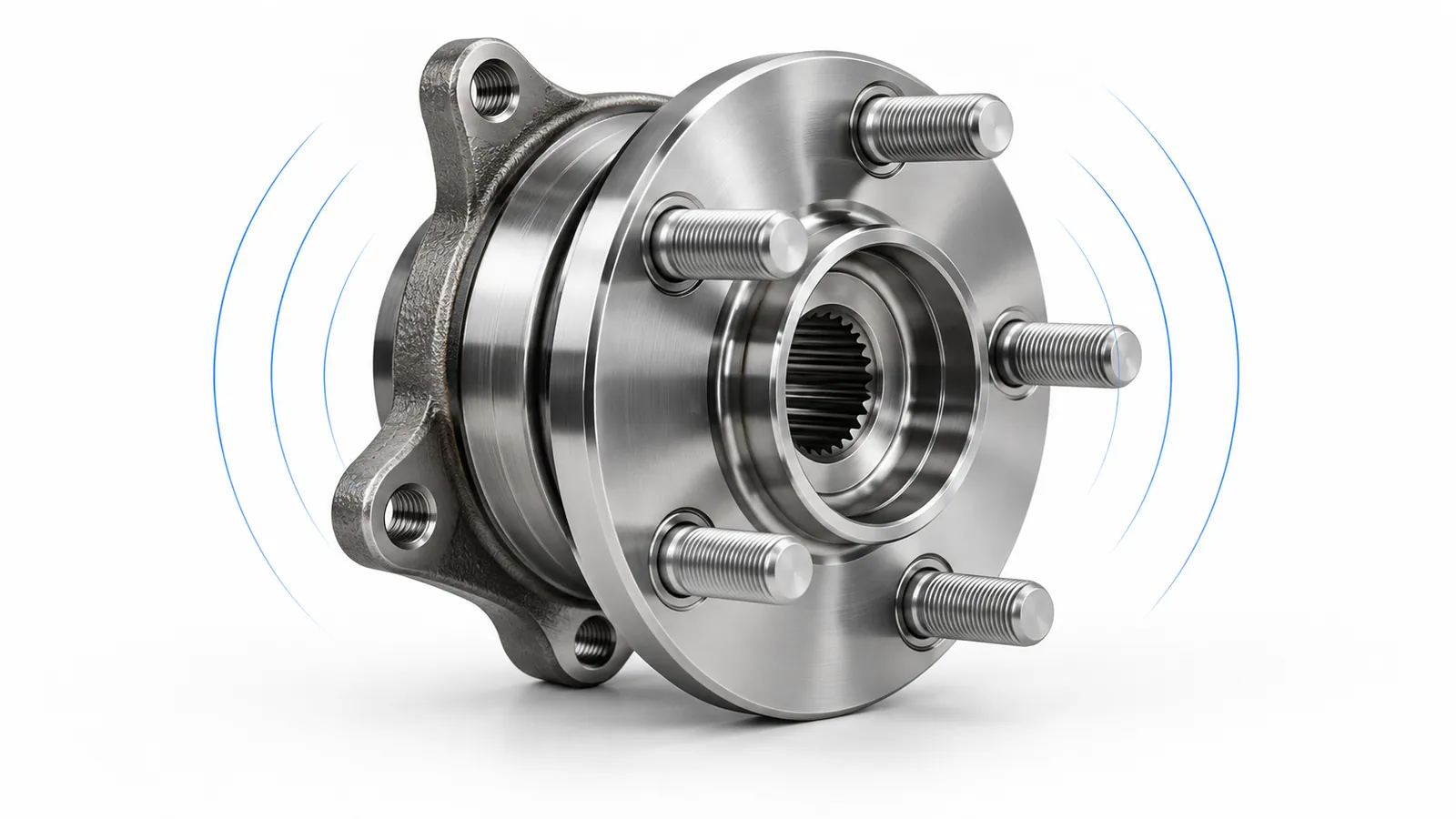
On a sealed Gen 2 or Gen 3 hub unit the preload is set when the unit is built, but it stays correct only if the axle nut clamps the inner rings together as the vehicle maker intended. On older adjustable tapered roller designs there is no factory setting at all: the nut adjustment sets the bearing end play directly. Either way, the nut is part of the bearing setting, not just a fastener that stops the hub falling off.
This is why the torque figure belongs to the vehicle, not to the bearing. The same bearing can sit behind different nuts, threads and hub designs, and each one has its own figure and procedure.
What torque should wheel bearing bolts be?
There is no single answer, and a figure taken from a generic chart or another car is a guess. A wheel corner has several fasteners, each with a different job:
| Fastener | What it does | Why the vehicle's own figure matters |
|---|---|---|
| Hub mounting bolts (hub flange to knuckle) | Hold a bolt-on hub unit square against the steering knuckle or axle carrier | Uneven or wrong torque can pull the flange out of square and distort the outer ring; the figure depends on bolt size, grade and knuckle design |
| Axle nut (hub nut or spindle nut) | Clamps the bearing inner rings together, or on adjustable designs sets the end play | Sets or holds the preload the bearing relies on; this figure varies the most from vehicle to vehicle and between front and rear |
| Wheel nuts or bolts | Clamp the wheel and brake disc to the hub flange | Uneven tightening can distort the disc and flange, felt as brake judder rather than bearing noise |
Hub mounting bolts sometimes fall in a similar range across vehicles of a similar size, but they still differ by bolt size and grade. The axle nut is the one that most directly affects the bearing, and its procedure can include more than one number: a seating step, a final torque, sometimes an extra angle, and on some vehicles a rule that the final step is done with the wheels on the ground.
The safe answer is the figure and the full procedure in the service manual for that exact vehicle, model year and axle. If a figure cannot be confirmed, do not fit the hub until it is.
What happens if a wheel bearing nut is too loose?
An under-tightened axle nut leaves the inner rings unclamped. Under load the hub can shift on the bearing instead of running true, and the bearing sees uneven, changing loads it was not designed for.
- Play: the wheel can be rocked by hand at the top and bottom of the tire, and the play grows with use.
- Noise: a knock or clunk over bumps, then a growl as the raceways wear.
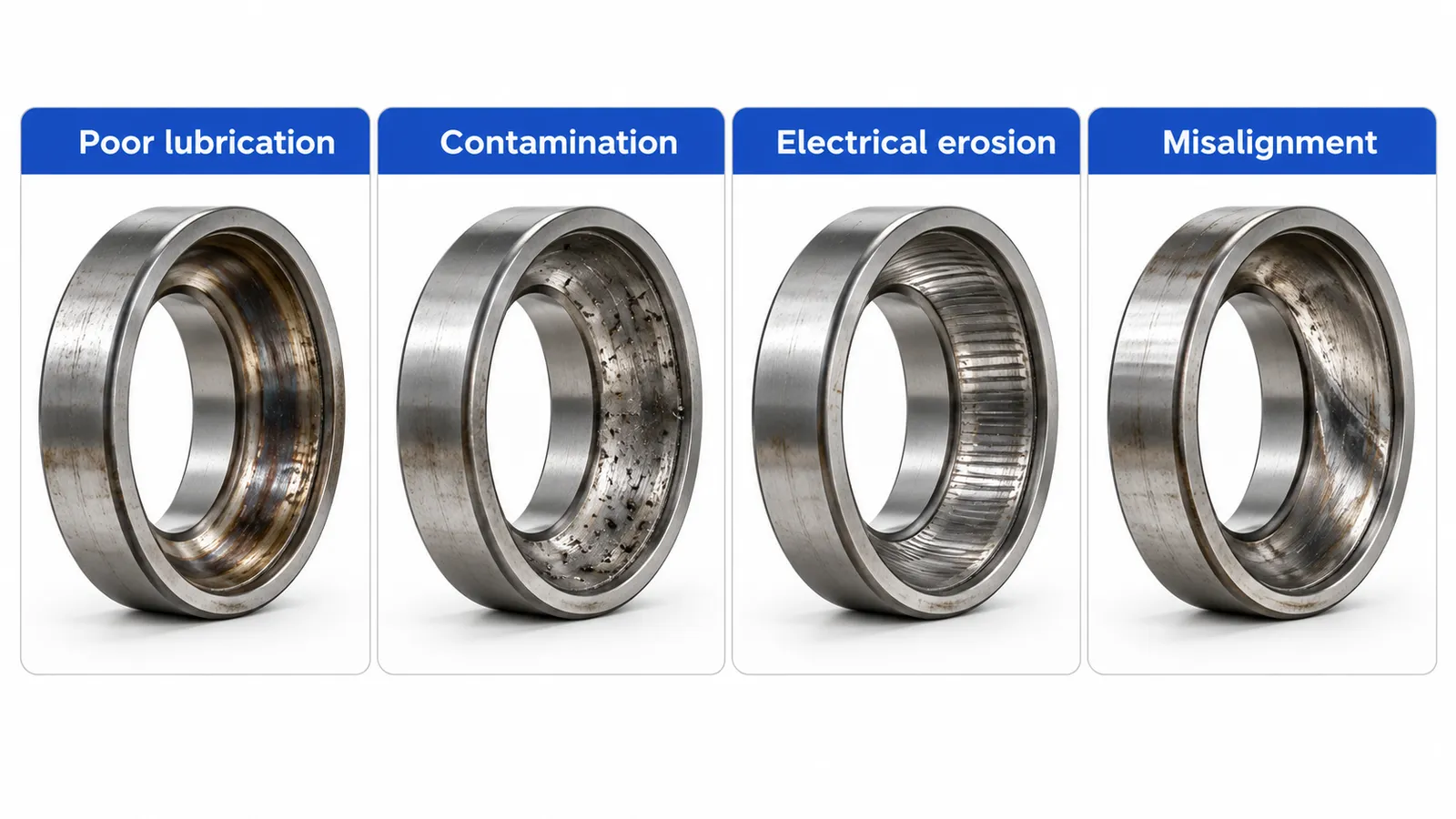
- Fretting and faster wear: small movements between the rings and their seats wear the surfaces and leave rust-coloured fretting marks.
- Pitting and flaking: uneven loading concentrates stress on part of the raceway and starts surface damage early.
- ABS faults: the encoder ring moves relative to the wheel speed sensor, so the signal becomes erratic and the ABS warning light can come on.
- A nut that works looser: once the hub can move, it can keep loosening the nut, especially if the nut was not locked.
A loose nut is often found after a repair where the nut was run up by hand or with a low-setting tool and never torqued, or where a staked nut was reused and did not hold.
What happens if the axle nut is over-tightened?
Over-tightening is less obvious at first, because the wheel feels tight and quiet. Inside the bearing the preload is too high, and the balls or rollers are pressed harder against the raceways on every turn.
- Heat: extra preload raises friction, and the hub runs warmer than the other side.
- Grease breakdown: the grease thins and oxidises at the higher temperature and stops protecting the surfaces.
- Early flaking: the raceways carry far more stress than they were rated for, so fatigue damage appears long before normal life.
- Cracked rings or a seized bearing: in severe cases a ring can crack, or the bearing overheats until it locks.
An impact wrench used to run the nut down to its final setting causes the same damage and more. The torque is uncontrolled, and each hammer blow passes through the balls or rollers and can dent the raceways before the car has moved.
How is an axle nut tightened and locked correctly?
The exact steps belong to the service manual, but the general principles are the same on most vehicles:
- Find the figure and procedure for that vehicle, model year and axle before starting.
- Clean the threads and the nut seat, and fit a new nut where the vehicle maker calls for one. Staked nuts and many prevailing-torque nuts are single-use.
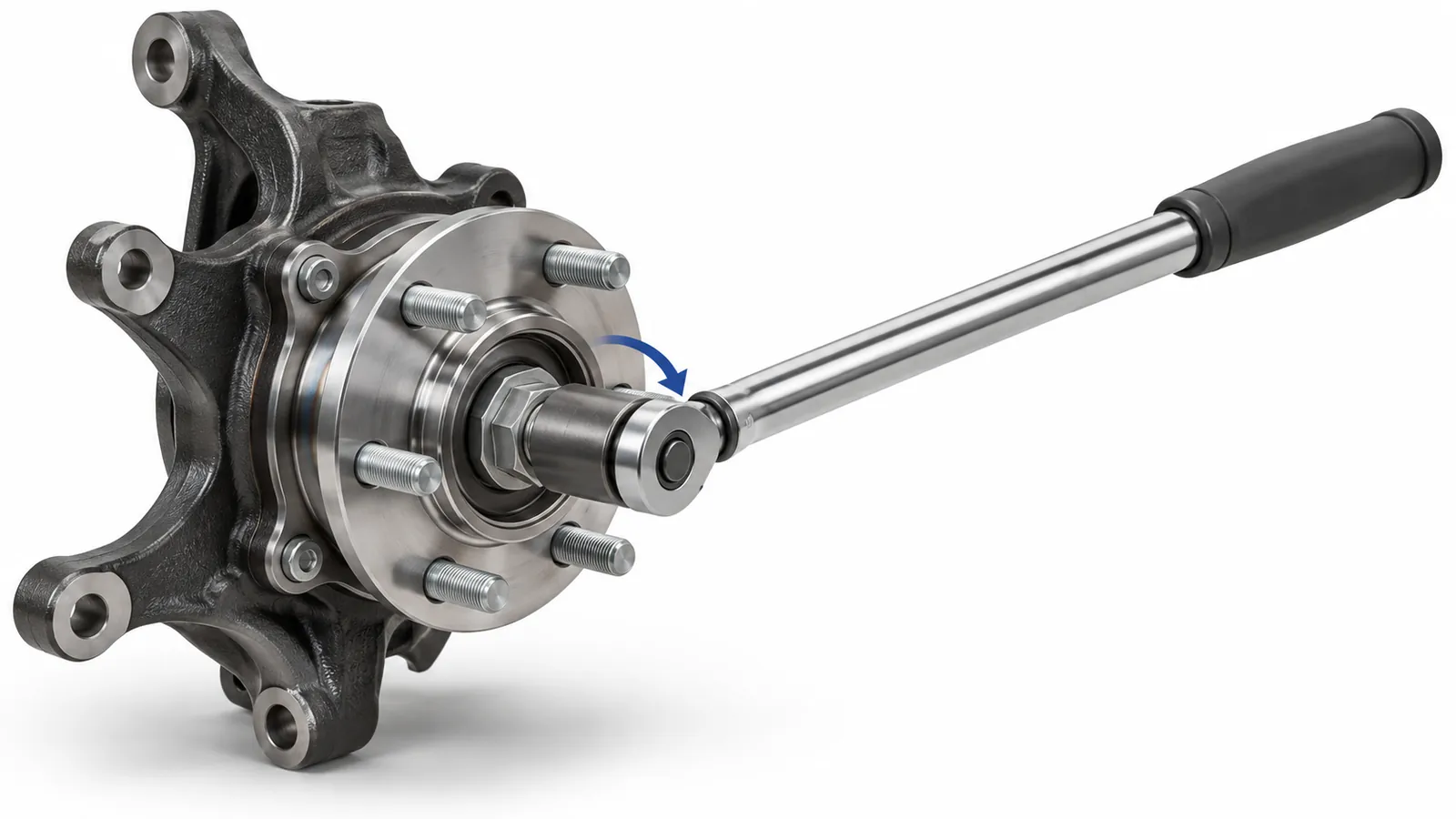
- Run the nut down by hand or with a hand tool, then tighten it with a calibrated torque wrench, not an impact wrench.
- Follow the sequence in the manual, including any seating step, angle step, or a requirement to finish with the vehicle's weight on the wheels.
- Lock the nut the way the design requires: stake the collar into the spindle slot, fit a new cotter pin, or fit the retainer or lock plate.
- On castellated nuts with a cotter pin, follow the manual on whether to go to the next slot or back off to it. Do not guess, because on adjustable designs this choice changes the end play.
- After fitting, spin the wheel and check for play, roughness and noise, and re-check the nut where the manual says to.
Is there one torque spec for every wheel hub bearing?
No single number covers every vehicle. The wheel bearing and hub on a small front-wheel-drive car can call for a very different axle nut torque than a one-ton truck, and two vehicles from the same maker can still differ by model year or drive type (2WD vs 4WD). A bearing supplier can explain how the bearing should be clamped in principle; only the vehicle maker's own service manual gives the number for a specific make, model, year and axle.
Treat a figure copied from a forum post, a different vehicle, or a generic "wheel hub bearing torque specs chart" the same way as a guess: it may be close, or it may be far enough off to under- or over-load the bearing. Confirm the number in the manual before tightening.
How do you order a wheel hub bearing or hub assembly?
Wheel hub bearings and hub assemblies are on the wheel hub bearing page. Send the part number stamped on the old unit, or the vehicle make, model, year and wheel position (front or rear, with or without ABS), so we can check it against the range. Every ENRO bearing is Made in China and passes 100% outgoing inspection under Japan-managed quality control. Your inquiry goes straight to the export team, not a call center. We reply within 24 hours on business days.